
Loading…
Loading…
28 October 2026
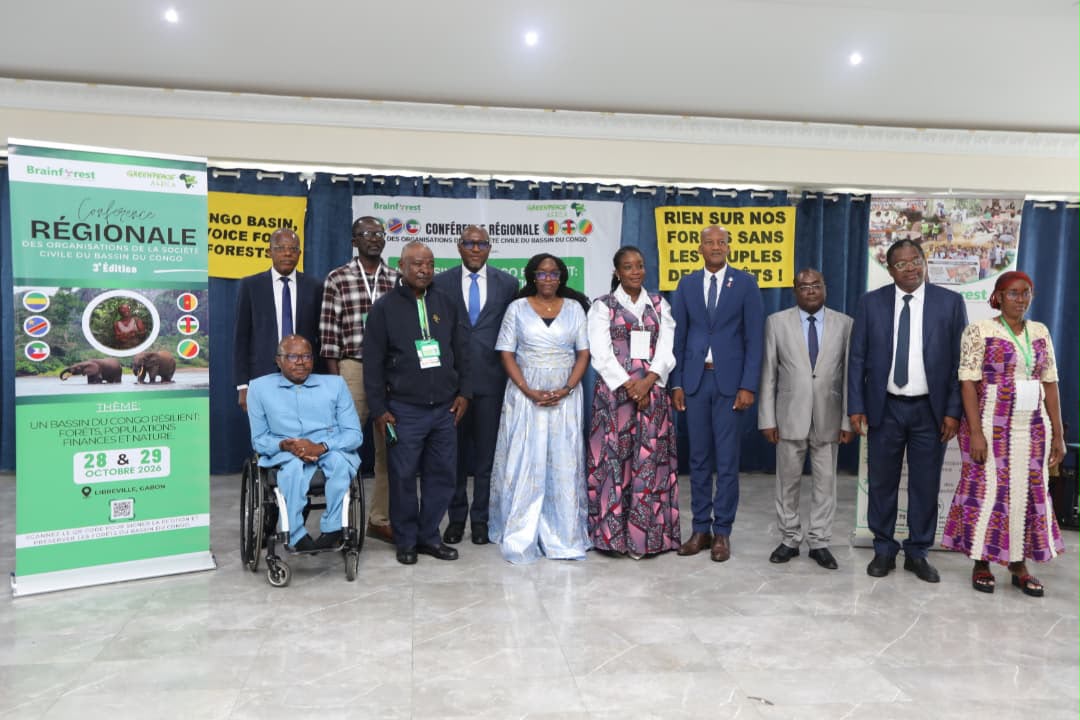
The 3rd Conference of Civil Society Organizations of the Congo Basin officially opened its proceedings this Wednesday, October 28, 2026, at the Kings Choice Hotel in Akanda, in the presence of the Minister of Water and Forests, in charge of Human-Wildlife Conflict, the Secretary General of the Ministry of the Environment, and the Executive Secretary of the National Agency for National Parks.
Organized by Greenpeace Africa and Brainforest, and held under the theme "A Resilient Congo Basin: Forests, People, Finance, and Nature", this regional gathering brings together more than 50 participants from the six Congo Basin countries, namely: Cameroon, Congo, Gabon, Equatorial Guinea, the Central African Republic, and the Democratic Republic of the Congo.
At the opening of the proceedings, the Minister of Water and Forests emphasized the importance of collective mobilization to preserve the world's second-largest tropical forest block. In this regard, he reiterated that "the preservation of Congo Basin forests cannot be sustainable without the engagement of communities, the mobilization of tailored funding, and strengthened cooperation between States and CSOs."
During this gathering, representatives of Civil Society Organizations, Indigenous Peoples, Local Communities, researchers, public institutions, and other stakeholders are engaging around a common goal: building a strong and coordinated regional position in favor of forest protection, environmental justice, and the effective participation of communities in decisions that affect their future.
Beyond these discussions, this third edition represents a strategic opportunity to strengthen synergies among sub-regional stakeholders, bring the concerns of local communities and indigenous peoples to the heart of environmental debates, and promote more inclusive and sustainable governance of the Congo Basin's natural resources.
The major challenge is to turn the preservation of forest ecosystems into a lever for sustainable development, social justice, and resilience for the region's populations.